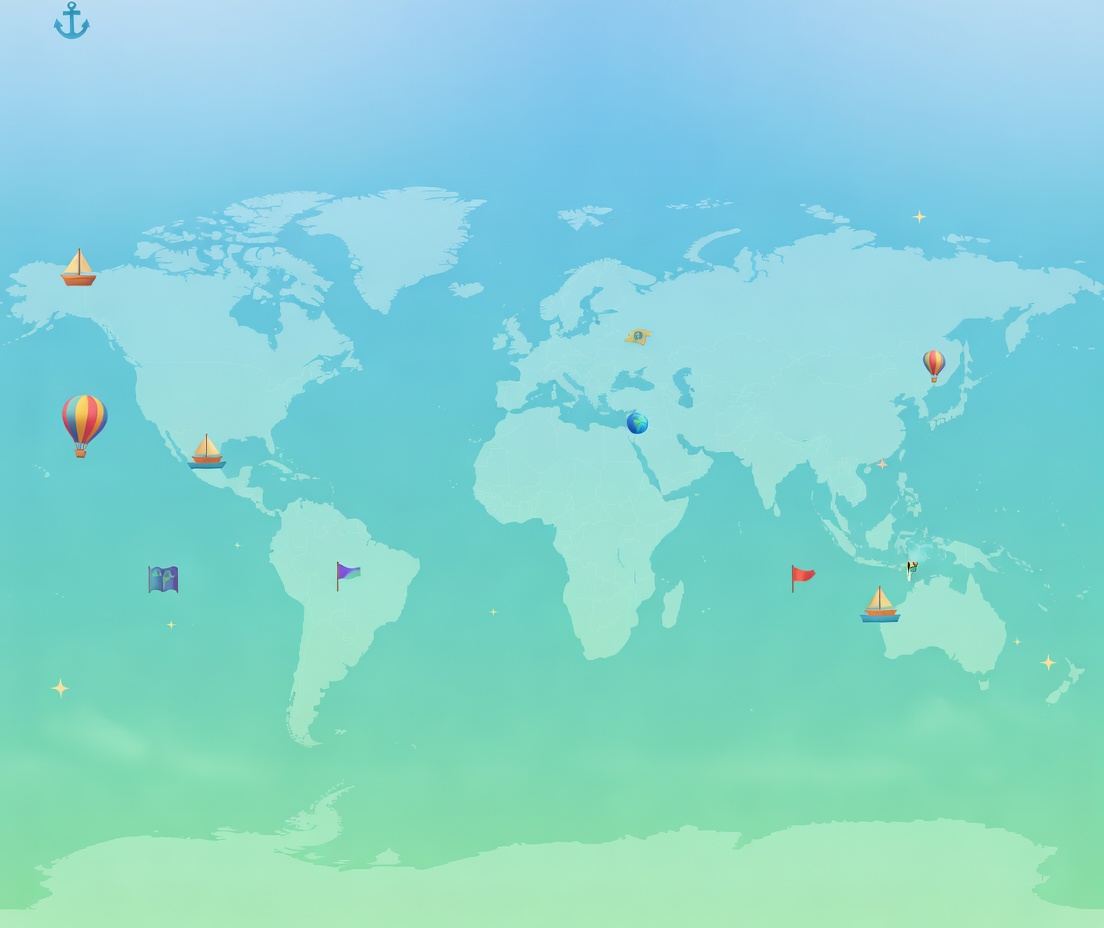
What does a national flag represent?
A national flag is a design that stands for a country and its people. You can see flags on government buildings, at sporting events such as the Olympic Games and on ships to show which country they are registered in. When people see their flag, it can remind them of their shared history and identity.
A flag is a symbol, not a map or a full history book. Some countries officially explain what their colours or pictures mean, such as Ireland and the United States. Others, such as South Africa, deliberately give no official meaning. On this page we only describe meanings that a country or a reliable reference explains.
Why countries have flags and how designs develop
Flags began as banners that helped people recognise groups from far away, for example in battle or at sea. Today they help people identify a country quickly without needing to read any words.
Flag designs can change when a country becomes independent, changes its government or decides it needs a new symbol. Canada replaced its earlier flag with the maple leaf in 1965, and South Africa adopted its present flag in 1994. Because flags do change, always check that a reference book or website is up to date.
Common flag patterns, colours, symbols and shapes
Stripes are the most common pattern. A triband has three stripes, which can be vertical (France, Italy, Ireland) or horizontal (Germany, Russia, the Netherlands). Bicolours have two stripes, such as Poland and Ukraine. Always notice the direction of the stripes as well as the colours.
Crosses appear on many flags. A Nordic cross has its upright arm shifted towards the flagpole, as on the flags of Denmark, Norway, Sweden, Finland and Iceland. A saltire is a diagonal cross, like the gold one on Jamaica’s flag. The Union Flag of the United Kingdom combines three crosses.
Symbols include stars, suns, moons, leaves, animals and coats of arms. A canton is the upper corner next to the flagpole, where the United States places its stars and Australia and New Zealand place the Union Flag. The side nearest the pole is called the hoist. Most flags are rectangles; Switzerland and Vatican City are square, and Nepal is made of two triangles.
Learning objectives for KS1 and KS2
KS1 (roughly ages 5–7): recognise the flags of the four countries of the United Kingdom and the Union Flag, then a few flags from other continents. Name colours and simple shapes on a flag, such as stripes, a circle or a star, and say whether the stripes go up and down or side to side.
KS2 (roughly ages 7–11): use words such as hoist, canton, triband and Nordic cross to describe a flag. Find each country on a world map after naming its flag. Compare look-alike flags and explain the exact feature that tells them apart. Find out whether a country officially explains its flag before repeating a meaning.
Flag reference: twelve flags from six continents
Each flag below comes with a design fact checked against an official or reliable source. Name the country, then find it on a world map.
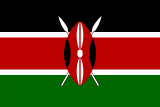
Kenya
Africa
In the centre is a Maasai shield with two crossed spears, on black, red and green stripes separated by thin white lines.
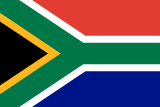
South Africa
Africa
Adopted in 1994. The government says no official meaning is given to its six colours, so there is no single ‘correct’ symbolism to learn.
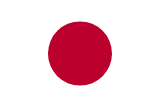
Japan
Asia
Its red disc on white is called the Hinomaru, meaning ‘circle of the sun’.

India
Asia
The navy-blue wheel in the centre is the Ashoka Chakra, which has 24 spokes.
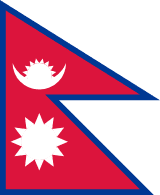
Nepal
Asia
It is the only national flag that is not a rectangle: two stacked triangles with a blue border.
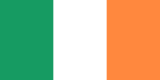
Ireland
Europe
The Irish Government explains green as the Gaelic tradition, orange as followers of William of Orange, and white as lasting peace between them.
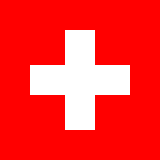
Switzerland
Europe
It is square, not rectangular. Only Switzerland and Vatican City have square national flags.

Canada
North America
The red maple leaf design became Canada’s national flag on 15 February 1965. The leaf has 11 points.
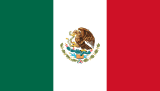
Mexico
North America
The coat of arms shows an eagle on a cactus eating a snake, from the Aztec story of the founding of Tenochtitlan.
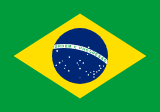
Brazil
South America
The 27 stars on the blue globe represent Brazil’s 26 states and its Federal District. The band reads ‘Ordem e Progresso’ (Order and Progress).

Australia
Oceania
Below the Union Flag is the seven-pointed Commonwealth Star; on the right is the Southern Cross constellation.
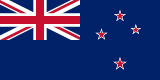
New Zealand
Oceania
Its Southern Cross has four red stars with white borders, not white stars.
Look-alike flags and how to tell them apart
Romania and Chad
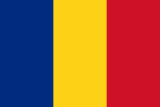
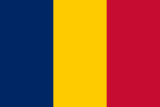
Both have vertical blue, yellow and red stripes. Chad’s blue is a darker indigo, while Romania’s is a brighter cobalt blue. The difference is small, so on a quiz use the shade and any clue about the continent: Romania is in Europe and Chad is in Africa.
Ireland and Côte d’Ivoire
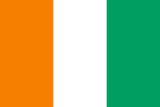
Both have vertical green, white and orange stripes, but in the opposite order. Ireland has green next to the flagpole; Côte d’Ivoire (also called Ivory Coast) has orange next to the flagpole. Remember: Ireland is famous for green fields, so green comes first.
Australia and New Zealand
Both are dark blue with the Union Flag in the corner and the Southern Cross. Australia has white stars (six in total, including the large Commonwealth Star). New Zealand has four red stars with white edges and no large star under the Union Flag.
Indonesia and Monaco
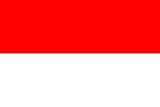
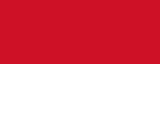
Both are red above white. Their colours look the same; the shape differs. Indonesia’s flag is longer (2:3), while Monaco’s is closer to a square (4:5). Poland is the reverse: white above red.
Norway and Iceland
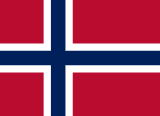
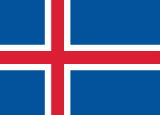
Both have a Nordic cross outlined in another colour. Norway is red with a blue cross edged in white. Iceland swaps the main colours: blue with a red cross edged in white.
Five flag-recognition exercises
1. Describe before you guess: look at Japan’s flag and say three things about it—its background colour, its shape and what is in the middle. Check: white background, rectangle, red disc. Describing first stops you mixing it up with Bangladesh, which has a red disc on green.
2. Spot the direction: compare Italy (vertical green, white, red) with Hungary (horizontal red, white, green). Say ‘up and down’ or ‘side to side’ for each. Check: Italy’s stripes go up and down; Hungary’s go side to side.
3. Start at the flagpole: for Ireland and Côte d’Ivoire, name only the colour next to the flagpole. Check: Ireland—green; Côte d’Ivoire—orange. Then try France (blue next to the pole) and Belgium (black next to the pole).
4. Count the stars: look at Australia and New Zealand. Count the stars on each and note their colour. Check: Australia—six white stars; New Zealand—four red stars with white edges.
5. Flag-to-map challenge: choose four flags from the reference section, one from each of four continents. Name the country, then find it on a world map. Check with the table: for example, Kenya is in Africa and Brazil is in South America.
Common mistakes
- Reading stripes in the wrong direction: Germany and Belgium use black, red and gold/yellow, but Germany’s stripes are horizontal and Belgium’s are vertical. Tip: tilt your head—if it would be a ladder, the stripes are horizontal.
- Forgetting the order of colours: Ireland, Côte d’Ivoire and Italy all have three vertical stripes. Always start at the flagpole side and say the colours in order.
- Mixing up similar names: Niger and Nigeria have very different flags. Nigeria’s is green, white, green in vertical stripes; Niger’s is orange, white and green in horizontal stripes with an orange circle.
- Inventing meanings: it is tempting to guess that red always means courage or that blue means the sea. Colours mean different things on different flags, and some have no official meaning. Use official explanations only.
Memory techniques that work
- Make a picture link: Canada’s maple leaf is a real leaf from trees common in Canada; Japan’s red disc is called the ‘circle of the sun’.
- Group flags into families: Nordic crosses (Denmark, Norway, Sweden, Finland, Iceland), Union Flag cantons (Australia, New Zealand, Fiji, Tuvalu) and red-and-white bicolours (Poland, Indonesia, Monaco).
- Say a short rhyme or phrase: ‘Ireland: green by the pole’, ‘Russia: white, blue, red from top to bed’.
- Practise little and often: five flags a day, with a second look the next day, works better than trying to learn fifty at once.
World flags: frequently asked questions
Why do countries have flags?
A flag is a quick way to show which country a building, ship, team or official belongs to, without using words. Flags are also used at ceremonies and sporting events, where they help people share a sense of belonging to their country.
Which national flag is not a rectangle?
Nepal. Its flag is made of two crimson triangles, one above the other, with a blue border, a white moon in the top triangle and a white sun in the lower one. Switzerland and Vatican City have square flags, which are still four-sided.
Why do some flags look almost the same?
Some countries chose similar popular designs, such as three stripes, and some share history. Romania and Chad differ mainly in the shade of blue; Indonesia and Monaco are both red above white but have different proportions. Look carefully at colour order, stripe direction, shades and shapes.
Why do Australia and New Zealand have the Union Flag on their flags?
Both countries have historic links with the United Kingdom, which is shown by the Union Flag in the canton (upper corner by the flagpole). Their stars show the Southern Cross, a constellation seen in the southern sky. Australia’s stars are white, and New Zealand’s four stars are red with white edges.
Do flag colours always have the same meaning?
No. A colour can have one meaning on one flag and a different meaning, or no official meaning, on another. Ireland officially explains its green, white and orange, but South Africa gives no official symbolism to its colours. Check an official or reliable source before saying what a colour means.
Keep exploring
Sources for further reading
- Government of Ireland: the national flag
- South African Government: national flag
- Government of Canada: history of the National Flag of Canada
- Australian Government: the Australian National Flag
- Manatū Taonga (New Zealand): the New Zealand flag
- Britannica: flag of Nepal
- Britannica: flag of Romania and its similarity to Chad
- Britannica: flag of Brazil